
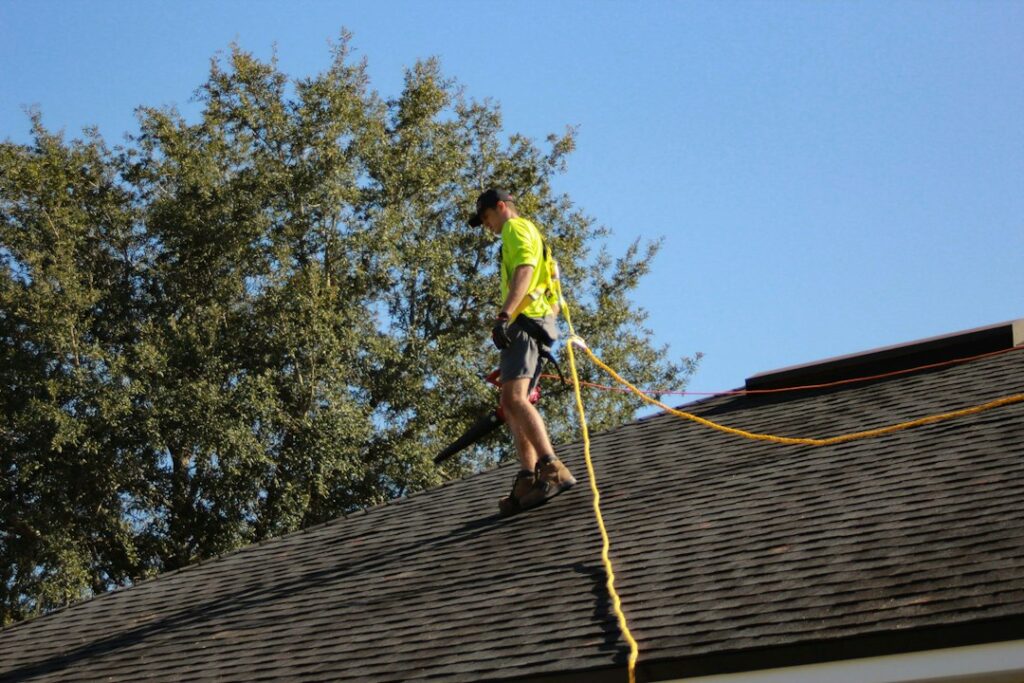
Hurricane season can affect Broadalbin, NY even though the community is inland. Tropical storms and hurricanes can move far from the coast while still producing damaging wind, heavy rain, falling trees, power outages, and roof leaks. Preparing the roof before a storm is forecast gives homeowners more time to correct small problems before they become emergency damage.
What should be checked before hurricane season?
The most useful preparation is a careful inspection of the roof, attic, gutters, and nearby trees. Look for conditions that could allow wind or rain to enter the home.
From the ground, check for:
- Missing, cracked, curled, or lifted shingles
- Exposed or damaged flashing around chimneys, skylights, vents, and roof edges
- Sagging areas along the roofline
- Loose gutters, downspouts, fascia, or soffit panels
- Damaged vent covers or plumbing vent boots
- Branches that touch or overhang the roof
- Debris collecting in valleys or behind roof penetrations
A roof does not need to be old to have storm vulnerabilities. A single loose shingle, exposed nail, failed seal, or poorly secured piece of flashing can become an opening when wind-driven rain reaches it.
Roof inspections should be done from the ground whenever possible. Walking on a sloped roof is hazardous, especially when shingles are wet, brittle, or covered with moss. Conditions involving steep slopes, electrical lines, structural damage, or unstable ladders require added caution and may need qualified assistance for safety.
How do gutters and downspouts protect the roof?
Clean, securely attached gutters help move heavy rain away from the roof edge, siding, foundation, and basement. During a tropical storm, clogged gutters can overflow against fascia boards or send water behind the siding.
Before the season:
- Remove leaves, pine needles, roof grit, and compacted debris
- Confirm that gutters slope toward their outlets
- Tighten loose hangers and replace visibly damaged sections
- Make sure downspouts discharge several feet away from the foundation
- Check that extensions will not wash out walkways or direct water toward the house
- Clear debris from roof valleys and areas around chimneys or dormers
Gutter guards do not eliminate maintenance. Fine material can still collect on top of or beneath them, and downspouts can become blocked. A quick flow test with a hose can reveal slow drainage or leaks, but it should not be performed from an unsafe ladder position.
What roof repairs matter most before high winds?
Small repairs should be addressed before a storm is approaching. Emergency conditions make roof work more dangerous, and temporary materials may be difficult to obtain.
Prioritize defects that affect the roof’s ability to resist wind or shed water:
1. Replace missing or badly damaged shingles.
2. Secure loose ridge caps and edge materials.
3. Repair flashing around chimneys, skylights, wall intersections, and vents.
4. Seal openings around roof penetrations using appropriate roofing materials.
5. Replace damaged plywood or other roof decking when there are signs of softness or water entry.
6. Check that attic vents are intact and securely fastened.
7. Repair loose soffits and fascia that could catch wind.
Do not cover an active leak with a random layer of caulk and assume the problem is solved. Sealants can be useful in specific applications, but they are not a substitute for repairing damaged flashing, underlayment, decking, or shingles.
Should homeowners inspect the attic?
Yes. The attic can reveal roof problems that are not visible from outside. Inspect it during daylight and after heavy rain if conditions are safe.
Look for:
- Dark stains on rafters or roof decking
- Damp insulation
- Musty odors
- Dripping or recently dried water
- Daylight visible through the roof sheathing
- Rust around nails or metal fasteners
- Mold or discoloration near vents and penetrations
Water does not always appear directly below the roof defect. It may travel along rafters or decking before entering the living space. A small attic stain may therefore indicate a problem farther upslope.
Also check that stored items do not block soffit or ridge ventilation. Good ventilation does not prevent hurricane damage, but blocked airflow can worsen moisture problems and shorten the life of roofing materials.
Can nearby trees damage a roof during a tropical storm?
Yes. In an inland community, falling limbs and uprooted trees may be a greater concern than direct hurricane-force winds. Saturated ground can reduce tree stability, while strong gusts can break dead branches and send them onto roofs, vehicles, or utility lines.
Before storm season, inspect trees near the house for:
- Dead or hanging limbs
- Cracks in major branches
- Trunk cavities or extensive decay
- Leaning trees
- Branches resting on the roof or utility lines
- Roots exposed by erosion or ground movement

Do not attempt to cut large limbs near the roof or power lines. Tree work can create serious fall, electrical, and ladder hazards. Removing weak branches before a storm is safer than trying to manage them during high winds.
What should be done when a storm is forecast?
Complete roof-related preparation before tropical-storm-force winds arrive. Once strong winds begin, stay off the roof and do not attempt outdoor repairs.
Before conditions deteriorate:
- Bring in patio furniture, planters, lawn decorations, toys, and loose tools.
- Secure sheds, temporary structures, and outdoor equipment.
- Close and latch windows, doors, and garage doors.
- Move vehicles away from trees when possible.
- Photograph the roof and exterior from safe locations for household records.
- Check that flashlights, batteries, phone chargers, and emergency supplies are available.
- Know where water may enter if a roof or window is damaged.
Do not tape windows as a substitute for storm protection. Tape does not prevent glass breakage or keep wind from entering a damaged opening.
If evacuation is advised, follow local emergency instructions rather than staying behind to monitor the roof. A damaged roof can be inspected after the storm has passed and authorities say travel is safe.
What should homeowners do after the storm?
Wait until winds, lightning, and falling debris hazards have ended. Never climb onto a roof during or immediately after severe weather if trees, power lines, or structural damage are present.
From the ground, look for:
- Missing shingles or roof sections
- Punctures from branches
- Sagging rooflines
- Detached gutters or flashing
- Water stains on ceilings and walls
- Broken skylights or damaged vents
- Fallen utility lines near the home
If water is entering, place containers beneath drips only when doing so is safe, move valuables away from the area, and limit contact with wet electrical equipment. Do not enter an attic if the ceiling is sagging, the structure appears unstable, or electrical hazards may be present.
A temporary tarp may reduce additional water entry, but installing one on a wet or damaged roof can be dangerous. Roof damage should be documented with photographs from the ground when possible, and insurance policies should be reviewed beforehand so residents understand deductibles, exclusions, and documentation requirements.
In Broadalbin, preparation should account for more than coastal storm surge. Heavy rain, saturated soil, falling trees, wind-driven debris, and long power interruptions can all affect an inland home. A sound roof, clear drainage, trimmed trees, and a practical emergency plan provide the most useful protection before the next tropical system moves through.
